
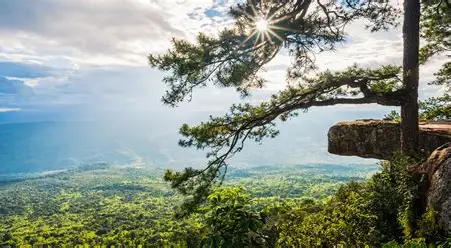
Phu Kradueng National Park: Hiking & Camping Guide 2026
Phu Kradueng is Thailand’s most demanding and rewarding national park hike. An 8.5km climb up a sandstone escarpment in Loei province takes you from the hot Isan plain to a cool, pine-forested plateau at 1,316 metres above sea level — a different climate, a different landscape and a different Thailand entirely. It is hard work to reach. It is absolutely worth it.
The park is open from October to May and closes completely from June to September to allow vegetation recovery. If you’re in Isan during the cool season (November–February), Phu Kradueng should be on your itinerary.
Part of our Northeast Thailand (Isan) Complete Travel Guide
What Is Phu Kradueng?
Phu Kradueng (ภูกระดึง) is a flat-topped sandstone mountain in Loei province, northwestern Isan. The name means “Bell Mountain” in Thai — traditionally said to refer to the bell-like sound of the wind across the plateau’s edge, though the etymology is disputed. The plateau itself covers roughly 60 square kilometers of grassland, pine forest and cliff edges at altitude — dramatically cooler than the valleys below.
The park was designated a national park in 1962 and remains one of Thailand’s most visited natural attractions among Thai domestic tourists, while remaining virtually unknown to international visitors. On weekends during the cool season the plateau fills with Thai families, student groups and adventure travelers. On weekdays outside peak season you can have large stretches of it almost to yourself.
The Hike Up: What to Expect
Distance & Gradient
The main trail from the park headquarters to the plateau rim is 8.5km with approximately 700 meters of elevation gain. The first 3–4km are relatively gentle through forest; the final section climbs steep stone steps — some cut directly into the rock face, some built into the escarpment over decades — that constitute the serious work. There is no way to avoid this section. It is steep, exposed and takes most walkers 30–60 minutes of concentrated effort even at fitness.
Total hiking time up: 3–5 hours depending on fitness and how many stops you take. The descent is faster but harder on the knees: 2–3.5 hours. Most people either day-hike (up and down the same day) or camp at the top for 1–2 nights.
The Trail Conditions
The trail is well-maintained and clearly marked. Rest stops with vendors selling drinks, snacks and fruit appear at regular intervals — you won’t run out of water if you run low. The stone steps in the steep section are worn smooth in places and can be slippery if wet or if you’re not wearing appropriate footwear. The trail is open from approximately 6am to 2pm for upward hikes — the deadline exists to ensure everyone reaches the top before dark. Do not start the climb after 1:30pm.
Honest assessment: Phu Kradueng is not technically difficult, but it is physically demanding. The steep section in heat (even in cool season, the lower slopes can be warm) is genuinely tiring. People who underestimate it struggle. People who prepare properly have a great time. Wear proper shoes, start early, carry water, and take the rest stops seriously.
Porter Service
A porter service operates from the trailhead, carrying luggage to the top for a fee based on weight. If you’re camping, using a porter for your camping gear is strongly recommended — carrying a full pack up the escarpment significantly increases the difficulty and reduces the enjoyment of the hike itself. Typical cost: 30–40 THB per kilogram. Arrange at the trailhead in the morning.
What’s on the Plateau
The Landscape
The plateau is the payoff for the climb. At 1,316 meters, the temperature is reliably 10–15°C cooler than the valley — in January and February, night temperatures can drop to 5–10°C, making blankets and layers genuinely necessary. The terrain is open grassland interspersed with stands of pine trees (unusual in tropical Thailand) and sections of deciduous forest that turn gold and red in November–December. The combination of high altitude, cool air, pine forest and open meadows feels more like northern Europe than Southeast Asia.
Viewpoints
The plateau rim has multiple cliff-edge viewpoints looking out across the Isan plain hundreds of metres below. The best are:
- Pha Nok Aen (Swallow Cliff) — the most dramatic viewpoint on the plateau, looking northwest across a vast open landscape. At sunrise the cloud inversion below the cliff — a sea of mist filling the valley while you stand above it in clear air — is one of the most photographed natural scenes in Isan. Reach it the night before sunrise and stay to watch.
- Pha Luang (Great Cliff) — the largest cliff section on the plateau edge, with sheer drops into forest below. Not fenced — take appropriate care.
- Pha Mak Duk (Tamarind Cliff) — another strong viewpoint with different vantage across the plateau interior. A longer walk from the main camping area.
Waterfalls
Several small waterfalls drop from the plateau edge, most impressive in October–November immediately after the wet season when water flow is highest. By February and March the falls are reduced to trickles. The main falls are a 1–2km walk from the camping area and are signposted.
Wildlife
Phu Kradueng is a significant wildlife habitat. The animals most commonly seen by visitors include:
- Sambar deer — large, elk-like deer that appear on the grasslands particularly at dawn and dusk. Remarkably unafraid of people in the camping area.
- Barking deer — smaller, heard more than seen, with a dog-like bark that can be startling at night
- White-handed gibbons — heard swinging and calling in the forest, occasionally visible
- Hornbills — large birds, unmistakable in flight, commonly seen and heard
- Asian elephants and tigers — present in the park but almost never seen by day visitors. Elephant tracks are occasionally found on less-used trails.
Camping at Phu Kradueng
Camping is the best way to experience the plateau — it allows you to be at the viewpoints for sunrise and sunset without the time pressure of a day hike, and the cool night air and star-filled skies (minimal light pollution) are part of what makes Phu Kradueng memorable.
Tent Hire
You do not need to bring your own tent. The park authority rents complete camping sets (tent, sleeping bag, pillow, mat) at the camping area for approximately 150–300 THB per night depending on tent size. Bring your own camping gear if you prefer, but tent hire is perfectly adequate and saves carrying equipment up the trail.
Camping Area
The main campsite on the plateau has designated pitching areas, basic toilet blocks, and a small cluster of food stalls and vendors selling noodles, rice dishes and drinks. It is not glamping — facilities are functional rather than comfortable — but everything you need is there. Evening at the campsite is one of the most social experiences in Thai nature travel: hundreds of Thai campers cooking together, music playing, deer wandering through between tents.
Food on the Plateau
Several permanent vendor stalls operate on the plateau selling cooked food, snacks, instant noodles and drinks throughout the day. Prices are higher than in town (everything has been carried up the mountain) but reasonable. A meal on the plateau costs 60–100 THB. Bring your own snacks and extra water regardless — the vendors close in the evening.
Best Time to Visit Phu Kradueng
| Month | Conditions | Crowds | Verdict |
|---|---|---|---|
| June–September | CLOSED — park shut | — | Cannot visit |
| October | Reopens. Wet-season greenery, wildflowers, full waterfalls. Some rain still possible. | Low | ⭐ Excellent for landscape |
| November | Deciduous trees turning. Cool evenings begin. Good all round. | Low-medium | ⭐⭐ Very good |
| December–January | Coldest months. Nights 5–10°C. Cloud inversions most reliable. Peak cloud sea views. | High (Thai school hols) | ⭐⭐⭐ Best experience |
| February | Still cool. Less crowded than December–January. Good visibility. | Medium | ⭐⭐ Very good |
| March–May | Getting hotter and drier. Waterfalls reduced. Still worth it but less dramatic. | Low | ⭐ Manageable |
Sweet spot: Weekdays in November or February. Cool enough to be comfortable, dramatic enough to be memorable, uncrowded enough to feel like you have the plateau to yourself.
Getting to Phu Kradueng
From Loei City (Most Common Route)
Loei is the provincial capital, 82km from Phu Kradueng. Loei bus station, songthaews and minivans run to Phu Kradueng district (the town at the base of the mountain) for approximately 50–80 THB, taking 1.5–2 hours. From Phu Kradueng town it’s a further 3km to the park headquarters — take a local songthaew or tuk-tuk (20–30 THB).
From Khon Kaen
Khon Kaen is 200km south of Phu Kradueng. Buses run between Khon Kaen and Loei (2.5–3 hours, 120–150 THB), from where you connect as above. Alternatively, direct minivans from Khon Kaen to Phu Kradueng district run in peak season (check current schedules). The total journey from Khon Kaen is 3.5–4.5 hours.
From Udon Thani
Udon Thani to Loei takes approximately 3 hours by bus (100–130 THB) via Route 2 then Route 210 through the mountains. The road from Udon Thani to Loei passes through genuinely spectacular scenery — if you have your own transport, it’s one of Isan’s better drives. From Loei, continue as above.
Getting to Phu Kradueng by public transport?
Compare bus and other available transport connections between Bangkok, Khon Kaen, Udon Thani and Loei before travelling.
Compare transport to Phu Kradueng →
By Car
Hiring a car from Udon Thani or Khon Kaen gives the most flexibility — you can stop at the Phu Kradueng road viewpoints on the way in, and the road itself through Loei province is worth driving. Park at the trailhead (secure car park available). Allow a full day’s drive if combining with other Loei province stops.
Prefer to explore Loei independently?
Hiring a car can make it much easier to combine Phu Kradueng with other destinations around Loei and Northeast Thailand.
Compare car hire in Thailand →
Essential Packing List
| Item | Notes |
|---|---|
| Trekking shoes or trail runners | Essential. Sandals and flip-flops will not work on the stone steps. Ankle support is valuable. |
| Warm layer / fleece | Essential if camping. Plateau nights are cold. 5–12°C December–January. A light jacket minimum at any time of year. |
| Headlamp | For sunrise viewpoint walks and moving around the campsite at night. |
| Water (minimum 2L up) | Refill at stalls on the trail. Don’t start without at least 2L. |
| Sunscreen and hat | The lower trail is exposed and hot even in cool season. |
| Insect repellent | Mosquitoes are present in the forested sections, less so on the open plateau. |
| Cash | No ATMs on the mountain. Bring enough for entry fee, porter (if using), food and camping. |
| Rain jacket | October–November in particular. Afternoon rain is possible even in cool season. |
Entry Fees & Practicalities
- Entry fee: 300 THB per adult foreigner, 60 THB Thai national. Payable at the park headquarters at the base of the trail.
- Opening hours for the trail: 6am–2pm (ascending). The trail closes to new ascents at 2pm.
- Park season: October 1 – May 31 annually. Closed June–September.
- Camping fees: 30 THB per person per night (park camping fee, separate from tent hire).
- Tent hire: 150–300 THB per night at the camping area kiosks on the plateau.
- Porter service: 30–40 THB per kilogram. Arrange at the base before ascending.
- No rubbish disposal on the mountain. Carry everything out that you carry in.
Frequently Asked Questions
How difficult is the Phu Kradueng hike?
Moderately difficult. The 8.5km trail has significant elevation gain and the stone steps in the final section are genuinely steep. Fit walkers in good shoes will manage comfortably. People with knee problems or limited hiking experience should prepare carefully. It is not technical climbing — just sustained physical effort.
Can I do Phu Kradueng as a day hike?
Yes, but it makes for a very long day. The ascent takes 3–5 hours, leaving limited time on the plateau before the descent. Most people who do it as a day hike wish they’d stayed the night. If you can only do one day, start at 6am and be disciplined about turning back by 1pm at the latest.
Is it cold on the plateau?
Yes, genuinely. December and January nights drop to 5–10°C. Even October and February can feel cold at altitude after sunset. Thai visitors often bring far more warm clothing than international visitors expect to need in Thailand. Bring more layers than you think necessary.
When is Phu Kradueng open?
October 1 to May 31 each year. The park closes completely from June through September for ecological recovery. Check the Department of National Parks website for any changes to dates before planning your visit.
Where to Stay Near Phu Kradueng
Accommodation on the plateau is camping only. In Phu Kradueng town (the village at the base of the mountain), several small guesthouses and local hotels offer rooms from 300–700 THB/night — useful for the night before or after your hike. Loei city, 82km away, has better hotel options including a Centara property for those who want a more comfortable base.
Staying near the park the night before the hike can make an early start considerably easier. Travelers wanting more hotel choice can also base themselves in Loei and travel to the park.
Find hotels near Phu Kradueng & Loei →
Related Guides